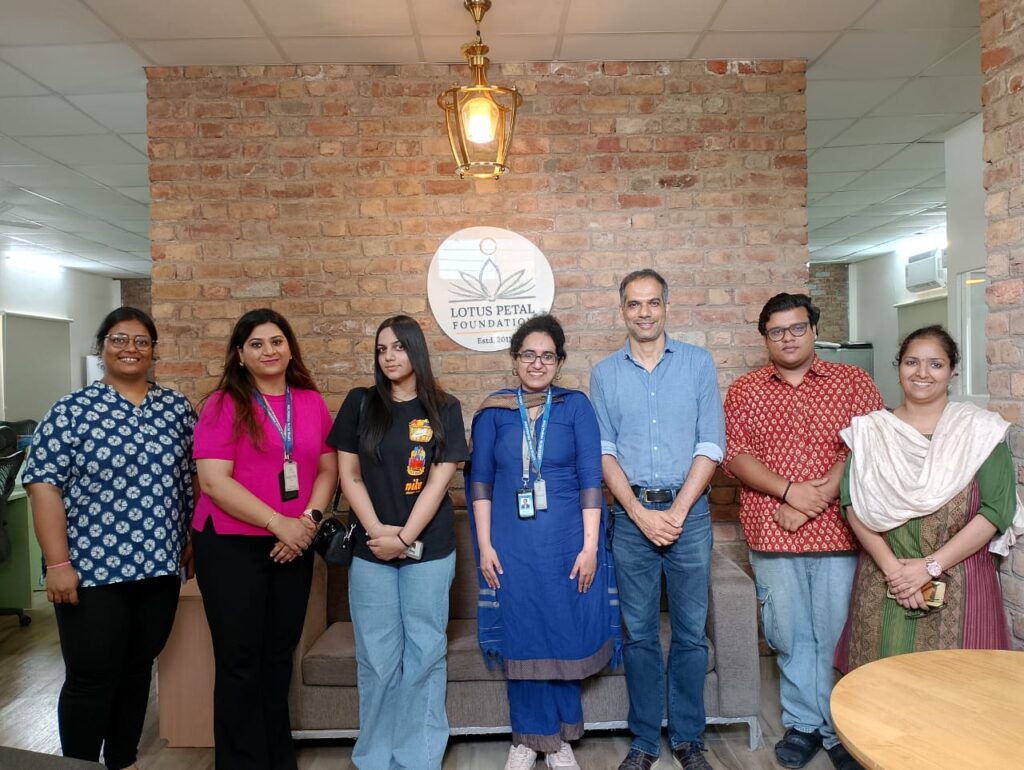
I must admit I approached the idea of interacting with a group of teenagers with a certain degree of excitement and trepidation. Excitement to share my passion for the legal profession and what I thought made it a worthwhile career option. Trepidation for what I recalled teenagers could be like if I could not hold their interest. After all it wasn’t that long ago that I had been one of them!
Choosing a career path can be quite challenging. There are so many options, so much information, and so much advice. But also, so few practical conversations, or first-hand experiences of young adults can strike a chord and provide guidance that resonates with a young audience.
Recalling my own confusions as I came of age and had to choose a career path, I decided to volunteer at the Lotus Petal Foundation and share my experiences with a young audience. As I said before, with mixed feelings – both excitement and trepidation!
Lotus Petal Foundation is a wonderful organization set up in Gurugram with over 1200 students from marginalized and economically weaker sections of society. For a nominal fee of Rs 18000 p.a., the organization provides a quality education to its students as a part of their extensive curricular and co-curricular activities. The institute invites volunteers to provide career counselling to its student body and also provide sessions/insights on skill development and industry trends. Volunteers are encouraged to share their professional experiences, mentor students, and help them navigate future opportunities. Through these sessions, students gain exposure to diverse fields such as technology, medicine, law, the arts, and more, equipping them with the knowledge and confidence to make informed decisions about their careers. The Lotus Petal Foundation’s commitment to holistic education ensures that its students are not only academically prepared but also ready to thrive in the real world.
Again, with the benefit of having recently departed teenage life, I decided not to follow the regular lecture/presentation approach but instead looked for innovative ways of catching and holding my audience’s interest. Having decided on my strategy, I also felt I needed to build a relationship and gain trust before I could offer any advice or life lessons.
I began by spending a day at the institute, listening. I wanted to experience and understand the functioning of the institute and the teacher-student relationship. Over the course of my first two visits, I spent time amongst various class and age groups, sat through some career counselling sessions and began to get a grip on the task at hand.
After much deliberation, I worked out my engagement strategy. I wanted to create a module that would be informative yet fun, and one that would remain with the students long after the session was over. Once I had my game plan in place, I felt really relaxed and excited about the session.
We began the class by talking about fundamental rights – what they are and why they are important. I followed that up with a reading of the preamble to the Constitution of India. A reading that always gives me goosebumps, reminds me of the power of justice. It was wonderful to see how the students picked up on my enthusiasm and responded on their own. Having laid out the framework, I then divided the class into small groups and asked them to write and then act out a scenario that in their minds exemplified a case of the use, or abuse, of fundamental rights. The teams gathered in excited little gaggles, animatedly discussing their ideas, and were soon scribbling away on their scripts.
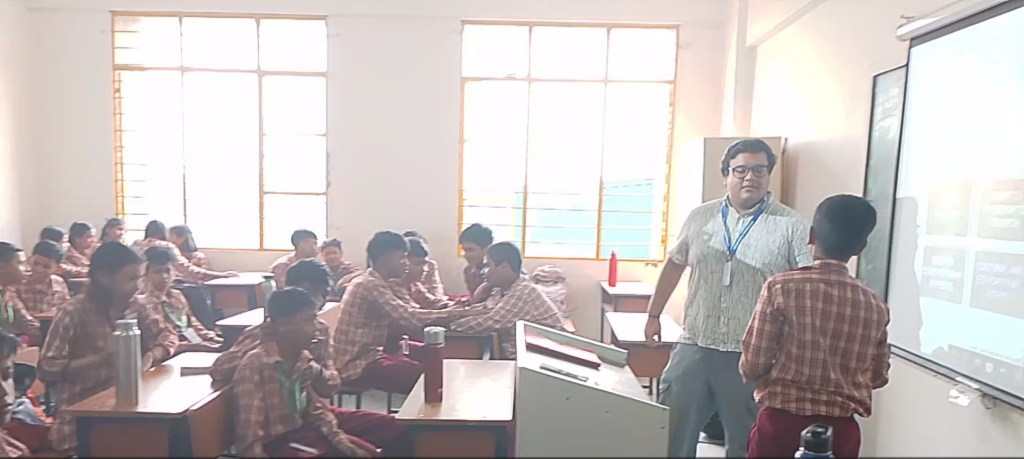
The afternoon session was an enlightening and enriching one for all concerned. The excited students who presented their ideas, and the teachers who sat in to see the hitherto hidden talents on display. The short skits were intelligently crafted, bringing to the fore issues ranging from gender equality to class-room politics of teachers playing favorites! Some addressed issues of freedom of speech; others chose politically charged issues of religious and caste-based persecution, police brutality, and much more. The day ended with a question-and-answer session with the students, and I came away deeply satisfied at being able to ignite an interest in law, and it’s just application amongst the students.
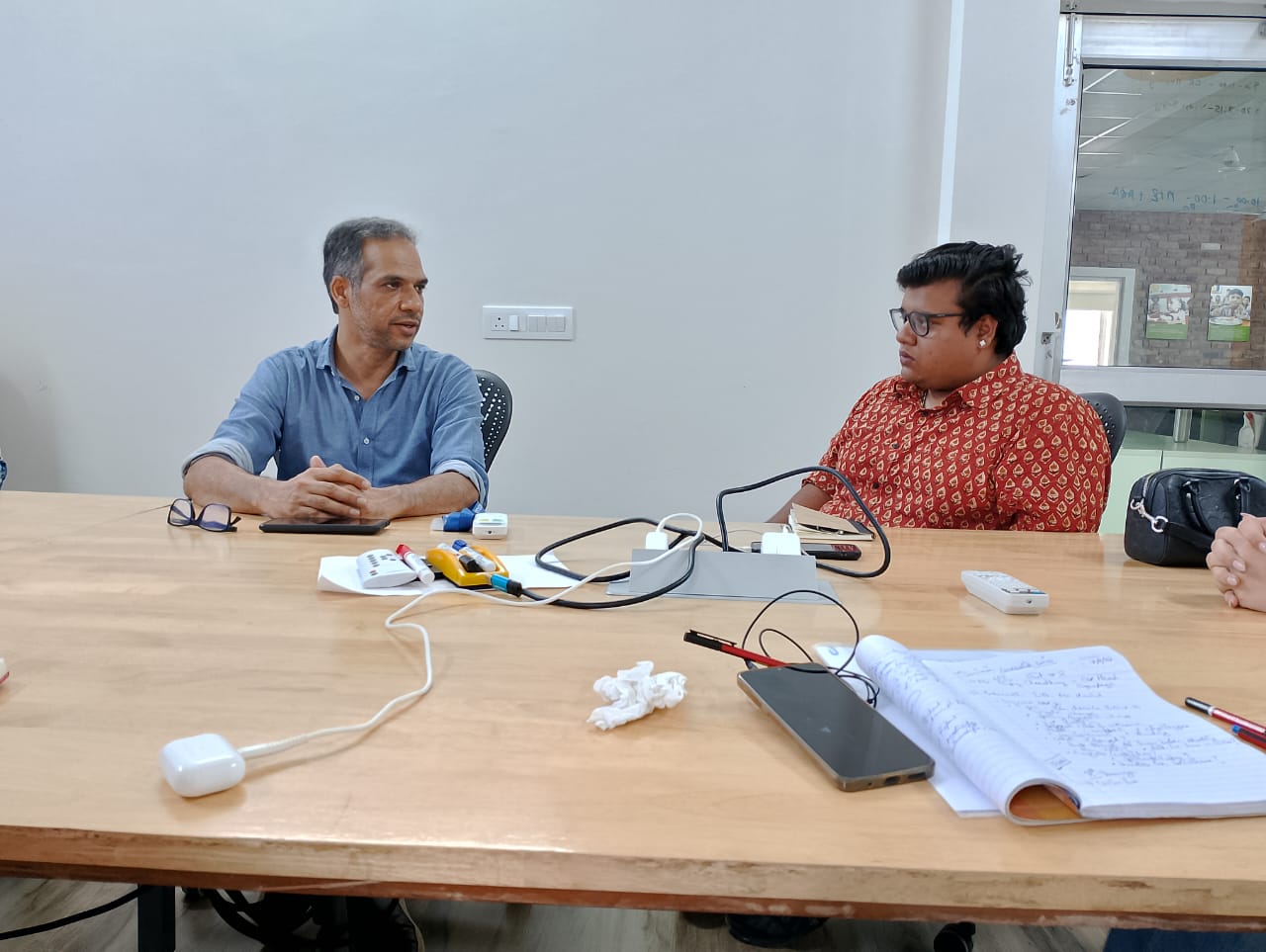
However, I felt I also needed to engage with the institute administration to understand the legal provisions and guidelines set up for the protection of young adults in their care. The institute, though somewhat surprised by my request, to their credit were very open to the idea. So, for my final session, I began by meeting with the administrative team and initiating conversations on bullying, harassment, punishment, child abuse, etc. Though some of the team members were initially a bit uncomfortable, they soon realized I was only seeking to help them understand the provisions under the law, which would assist them in doing their job and supporting the children under their care. There were many lacunae that we were able to identify and plug through a constructive dialogue.
The institute faculty were my last port of call – to receive feedback on my efforts. I must again admit to some doubts and misgivings, as my methods had been a bit unconventional, and I wasn’t sure how the faculty would react. Well, I needn’t have worried! I received a most glowing report card from the teachers, who were very pleased with the level of engagement I had been able to generate amongst the students. I was thrilled. It was wonderfully satisfying to know I had succeeded in communicating with my young audience, sharing my enthusiasm for law, and most importantly, choosing careers based on judicious research and driven by passion.
All in all, a pretty good outcome, even if I say so myself.